
For immediate release: Wednesday, December 22, 2025
OCALA, Fla. (Monday, Dec. 22, 2025) — The Thoroughbred Racing Initiative (TRI) has taken its first big step toward determining the best way to preserve and strengthen Florida’s thoroughbred racing and breeding industry. And if a feasibility study doesn’t sound glamorous or provide immediate answers, it’s the crucial underpinning to any responsible exploration into workable long-term solutions.
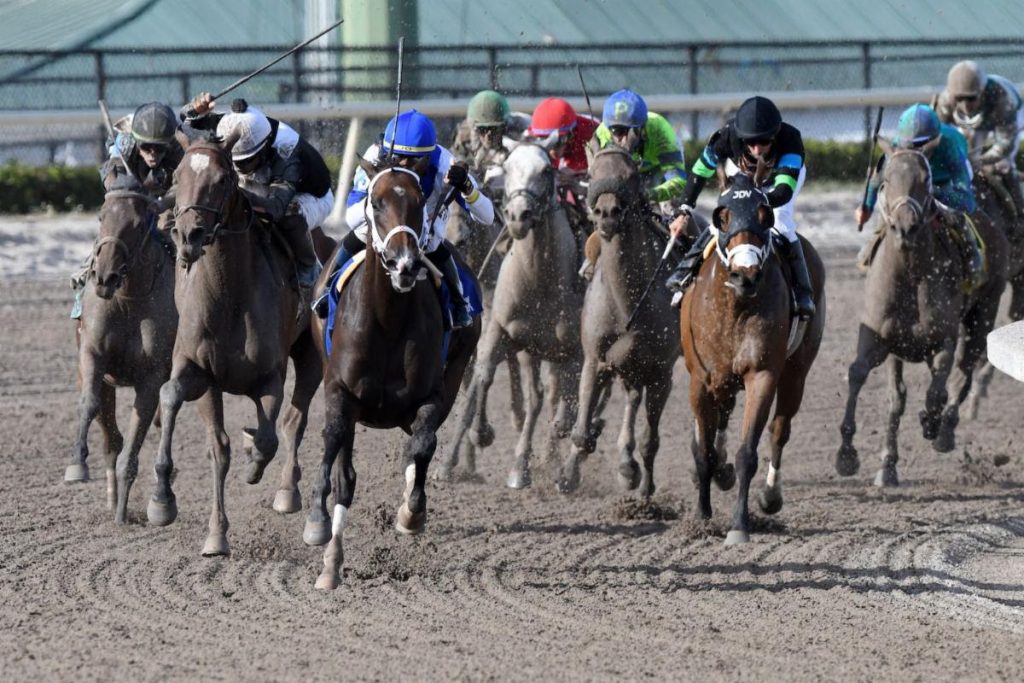
The feasibility study was commissioned by the TRI and the Florida Horsemen’s Benevolent & Protective Association, which represents Gulfstream Park’s racehorse owners and trainers. The study was produced by the acclaimed Crossroads Consulting Services of St. Petersburg, Fla., in conjunction with Populous, the global leader in architectural design.
“No successful project’s planning begins without a feasibility study,” said TRI Vice President Jon Green, the study’s point person. “We appreciate that people want to hear, ‘This is what we’re going to do to.’ But we can’t get there without starting here with clear-eyed research by independent experts identifying locations for discussion and various economic models with cost analysis and pros and cons based on a myriad of factors.
“That’s what we’re excited to announce today, the framework that allows us to concentrate our focus as we start meeting with industry stakeholders, lawmakers, civic leaders and, obviously, the current property ownership of potential sites. We promised the Florida legislature we didn’t want to just defeat decoupling but that we’d bring viable solutions to enable the industry and its role as an economic and tourism engine to thrive in the decades to come for the benefit of all Floridians.”
The study reviewed potential long-term racing sites, ranging from Gulfstream Park remaining as the year-round focal point of Florida racing to a “greenfield” concept with a track built from scratch at a site to be determined. The others are Hialeah Park’s current casino site, with both a year-round and a winter ship-in option described; and Tampa Bay Downs racetrack, which runs November through Kentucky Derby Day. In addition, the study reviewed Palm Meadows training center and the site of the defunct Calder Racecourse, with neither considered viable for racing.
The study also evaluated several ownership and operating models that could support a stable, transparent and reinvestment-oriented future for Florida racing. The study looked at both one-track and two-track scenarios, as currently exists. Kansas City-based Populous developed high-level capital cost estimates for potential venue and redevelopment scenarios.
“The stakes are too high not to do our due diligence,” said TRI Senior Advisor Damon Thayer. “We now have analysis to best evaluate strategic options and opportunities to strengthen the thoroughbred industry’s economic base.”
The study calls for sites to have at a minimum a one-mile dirt track, seven-furlong turf course with movable rail, 3,000-capacity grandstand and apron, large infield board, receiving and test barns, veterinary and claiming facilities, about 1,400 stalls and necessary backstretch support and parking.
Studied sites:
- Gulfstream Park: Facilities meet or exceed minimum year-round requirements and are in very good condition following recent surface and facility investments. No capital is required to continue year-round racing for the purposes of this study, though freestanding casino and possible hotel has been suggested to restore clubhouse racing spaces.
- Hialeah Park: The grandstand and paddock remain serviceable with targeted renovation, but stabling is absent and the site can host no more than about 1,000 stalls. A full year-round return would require track work, new racing barns, receiving and test barns and site development. Preliminary budget: $89.95 million. Given stall limits, an off-site training center may still be required.
- Hialeah winter ship-in option: An alternative limited meet would leverage the existing grandstand and new receiving capacity while reducing new construction. Preliminary budget: $50.65 million. Non-winter racing would need to occur at a different location, with separate training capacity solutions.
- Tampa Bay Downs: Tracks and stable area are functional, but the grandstand is outdated and needs significant renovation. Year-round operations would also benefit from widening the turf course with a movable rail, plus stable-area and site upgrades. Preliminary budget: $44.40 million.
- “Greenfield” concept: Assumes new racing operation on approximately 160-acres with a mile dirt track, seven-furlong turf track, 3,000-seat grandstand, 1,400 racing stalls and other required racing operations facilities. Preliminary budget: $194.80 million (land acquisition costs not included).
The ownership and operating models studied:
- nonprofit racing association (examples: Keeneland, Del Mar) governed by industry stakeholders and independent directors, with all net revenues reinvested into purses, incentives and facilities.
- public benefit corporation or State-charted quasi-public authority (example: New York Racing Association) that would manage racing as a public good, balancing accountability and transparency with direct access to appropriations and potential bonding authority.
- horsemen’s cooperative or FHBPA/Florida Thoroughbred Breeders’ and Owners’ Association (FTBOA)-led entity. Ownership and governance would rest with horsemen and breeders through a cooperative framework, ensuring direct stakeholder control over operations and reinvestment priorities.
- strategic partnership with a major racing or gaming operator under a management or joint-venture agreement, leveraging national expertise, capital and customer reach while retaining local representation in governance.
Using statistics from 2019-2024, Crossroads analyzed Florida racing and breeding’s current status compared with 10 representative peer states to benchmark Florida’s position and to identify lessons learned and best practices from other jurisdictions. Florida ranks third among the profiled states in mares bred and fourth in foal crop, with the state’s breeder and owner incentive programs offering some of the highest funding levels in the nation outside of Kentucky.
More information at thoroughbredracinginitiative.com.
How to donate: Click here or mail check payable to “Thoroughbred Racing Initiative, LLC” to 900 US-9 #601; Woodbridge, NJ 07095.
Media contact:
Damon Thayer, senior advisor
[email protected]
About the Thoroughbred Racing Initiative (TRI)
The Thoroughbred Racing Initiative (TRI) was founded in February, 2025, as an industry collaboration providing funding and resources to oppose Florida legislation for decoupling, which would allow tracks to keep their gaming licenses without conducting live horse — the original statutory requirement in place to protect one of the state’s signature industries. The TRI was founded by Ocala Stud general manager David O’Farrell (TRI president), prominent owner-breeder Jon Green of DJ Stable (TRI vice president); trainer Mark Casse, a member of both the North American and Canadian racing halls of fame; and Dr. Barry Eisaman, a veterinarian who with wife Shari operates the full-service farm Eisaman Equine in Williston. Leading industry organizations were brought in, including the Ocala Breeders’ Sales Co. (OBS), the Thoroughbred Breeders’ and Owners’ Association (FTBOA), the National Horsemen’s Benevolent & Protective Association, Tampa Bay Downs HBPA, Florida HBPA and Thoroughbred Owners and Breeders Association. Other racing and breeding associations, farms, industry-related businesses and individuals across the country have made financial contributions in support of protecting live racing. To donate, please click here.
About Crossroads Consulting Services
St. Petersburg-based Crossroads Consulting Services has conducted more than 800 studies for clients, specializing in providing independent, comprehensive research and analysis necessary to make informed decisions related to developing new projects, enhancing existing facilities, improving operations and/or refining business strategies. Crossroads Consulting has worked with a wide variety of government leaders, non-profit organizations, fair boards, business community members, educational institutions, citizen representatives, industry organizations, neighborhood groups, as well as facility ownership and management representatives such as architects, land planners and engineers. In many cases, the projects/facilities were envisioned as agents for economic development, allowing a community to serve both local needs and attract additional out-of-town visitors. The company prioritizes programming based on funding and economics, selecting site locations that maximize usage and financial performance, and assisting clients with an implementation strategy for development and an operating model for ongoing operations.
About Populous
Populous designs iconic spaces for the world’s most renowned names in sports and entertainment, from stadiums and arenas to event spaces and urban environments. With global headquarters in Kansas City and regional headquarters in London and Brisbane, Populous’ diverse team includes specialists across a range of disciplines, from architecture and interior design to branded environments, urban planning, event design and landscape architecture. Fast Company in 2022 named Populous one of the world’s 50 most innovative companies, ranking No. 1 in architecture.